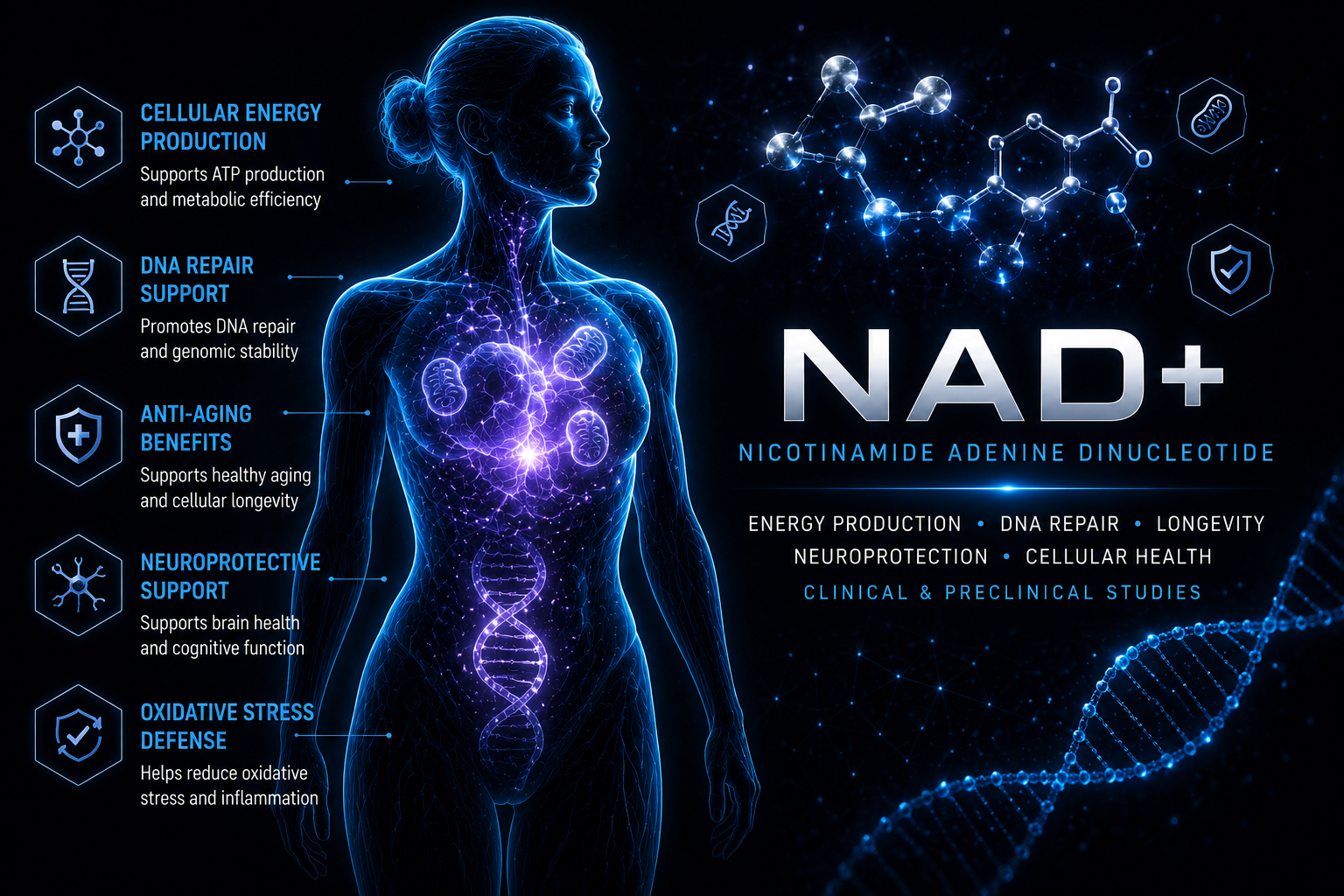
NAD+ is a naturally occurring coenzyme present in every living cell and is currently being investigated for its central role in cellular energy production, mitochondrial function, DNA repair, and healthy aging. As an essential component of numerous metabolic pathways, NAD+ participates in ATP generation, redox balance, and cellular signaling that supports overall metabolic homeostasis. One of the most extensively studied molecules in longevity and metabolic research, NAD+ continues to demonstrate promising potential across both preclinical and clinical investigations involving aging, neurobiology, cardiovascular health, and cellular resilience.
Cellular Energy Research
Essential Cellular Coenzyme
Clinical & Preclinical
Cellular Energy & Healthy Aging
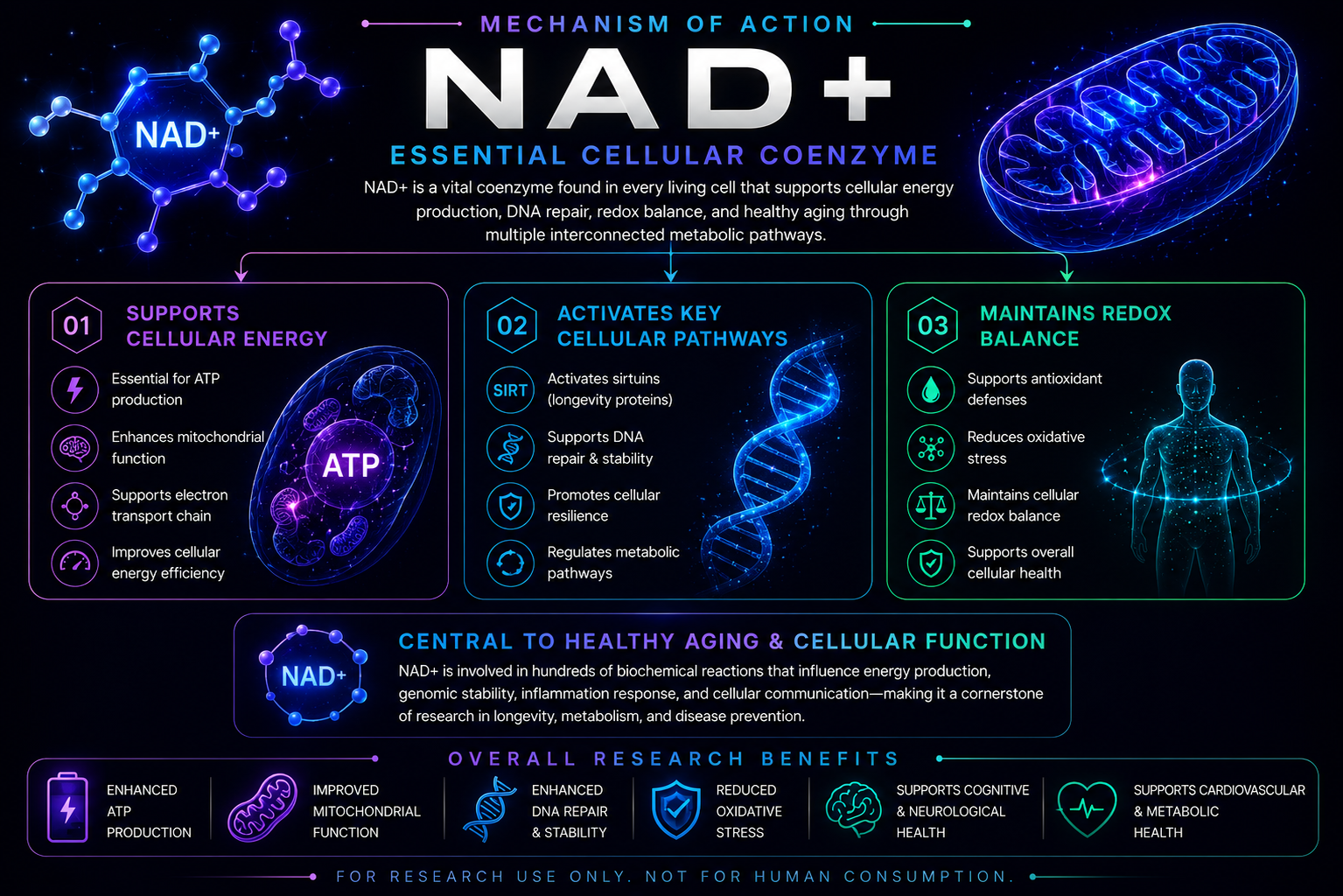
NAD+ is an essential coenzyme found in every living cell that plays a central role in energy metabolism, mitochondrial function, and cellular health. Acting as a critical electron carrier within metabolic pathways, NAD+ supports ATP production, redox balance, and the activity of numerous enzymes involved in DNA repair and cellular signaling. As one of the most extensively studied molecules in aging and metabolic research, NAD+ has become a cornerstone of investigations into longevity, neurobiology, and overall metabolic function.
Unlike many compounds that target a single receptor or signaling pathway, NAD+ participates in hundreds of biochemical reactions throughout the body. Research has demonstrated that maintaining healthy intracellular NAD+ levels supports mitochondrial efficiency, activates sirtuin enzymes, enhances DNA repair mechanisms, and promotes cellular resilience under metabolic and oxidative stress. These diverse biological functions have generated significant scientific interest in NAD+ across research involving healthy aging, cognitive health, cardiovascular biology, and metabolic disease.
Current research continues to investigate NAD+ metabolism, biosynthesis pathways, long-term safety profiles, and potential applications across aging biology, neurodegenerative disease, exercise physiology, mitochondrial dysfunction, cardiovascular health, and metabolic disorders. As with all compounds featured in the ChoicePeps Research Library, NAD+ is presented for educational and scientific reference purposes only.
Landmark Research Identifying NAD+ As A Central Cellular Coenzyme Essential For Energy Metabolism, Mitochondrial Function, DNA Repair, And Healthy Aging Across Multiple Biological Systems.
Comprehensive Research Demonstrating That Restoring NAD+ Levels Improves Mitochondrial Function, Activates Sirtuin Pathways, Enhances Cellular Bioenergetics, And Supports Metabolic Health During Aging.
Clinical Research Examining NAD+ Biology, Nicotinamide Metabolism, And Therapeutic Strategies Targeting Cellular Energy Production, Healthy Aging, And Metabolic Disease.
Comprehensive Review Summarizing NAD+'s Roles In Cellular Metabolism, DNA Repair, Sirtuin Activation, Oxidative Stress Regulation, Mitochondrial Biology, And Age-Related Disease Research.
Current preclinical and clinical research is investigating NAD+ across several important areas of cellular energy metabolism, mitochondrial biology, healthy aging, and metabolic health.
NAD+ (Nicotinamide Adenine Dinucleotide) is a naturally occurring coenzyme found in every living cell. It plays a critical role in cellular energy production, mitochondrial function, DNA repair, and metabolic regulation. Because NAD+ levels naturally decline with age, it has become a major focus of research in healthy aging, cellular resilience, and metabolic science.
NAD+ serves as an essential coenzyme in hundreds of biochemical reactions. It transports electrons during cellular respiration to support ATP production, while also acting as a required cofactor for enzymes such as sirtuins and PARPs that regulate DNA repair, oxidative stress responses, and cellular maintenance. These pathways are fundamental to normal cellular function and energy metabolism.
Researchers are investigating NAD+ because of its central role in cellular metabolism and aging biology. Declining NAD+ concentrations have been associated with reduced mitochondrial function, impaired DNA repair, and metabolic dysfunction. Ongoing studies are exploring whether restoring or maintaining NAD+ levels may support cellular health, resilience, and healthy aging processes.
Thousands of peer-reviewed publications have examined NAD+ metabolism and its role in cellular physiology. Research has investigated mitochondrial bioenergetics, sirtuin activation, DNA repair, neurodegeneration, cardiovascular health, metabolic disease, and age-related decline. Both preclinical and clinical studies continue to expand understanding of NAD+ biology and therapeutic potential.
NAD+ participates in numerous biological pathways, including mitochondrial ATP production, oxidative phosphorylation, sirtuin signaling, PARP-mediated DNA repair, redox homeostasis, and cellular stress responses. These interconnected systems help regulate energy production, metabolic flexibility, and overall cellular function.
NAD+ itself is a naturally occurring biological coenzyme and is not an FDA-approved drug for the treatment of disease. Within the ChoicePeps Research Library, NAD+ is presented exclusively for educational and scientific reference purposes and is not intended for human consumption.
Current research is evaluating NAD+ across a broad range of scientific fields, including healthy aging, mitochondrial dysfunction, neurodegenerative disorders, cardiovascular biology, metabolic disease, exercise physiology, and cellular repair mechanisms. Investigators also continue to study optimal delivery methods, long-term safety, and the effects of NAD+ on cellular resilience and metabolic health.
The information presented in the ChoicePeps Research Library is provided solely for educational and informational purposes. Content is compiled from publicly available scientific literature and is intended to summarize current areas of research involving investigational compounds.
The material presented on this page has not been evaluated by the U.S. Food and Drug Administration (FDA) and should not be interpreted as medical advice, treatment recommendations, or evidence of clinical efficacy. Scientific understanding continues to evolve as additional laboratory and clinical research becomes available.
ChoicePeps does not make claims regarding the diagnosis, treatment, cure, or prevention of any disease. Visitors are encouraged to consult original peer-reviewed publications when reviewing scientific findings.
Added to cart
Check out our shop to see what's available