FREE SHIPPING ON ORDERS OVER $99
SECURE CREDIT / DEBIT CARD CHECKOUT
3RD PARTY LAB TESTED - COA AVAILABLE
FOR RESEARCH USE ONLY
SHIPS WITHIN 24 HOURS
JOIN OUR DISCORD FOR GIVEAWAYS!
QUALITY YOU AN TRUST

FREE SHIPPING ON ORDERS OVER $99
SECURE CREDIT / DEBIT CARD CHECKOUT
3RD PARTY LAB TESTED - COA AVAILABLE
FOR RESEARCH USE ONLY
SHIPS WITHIN 24 HOURS
JOIN OUR DISCORD FOR GIVEAWAYS!
QUALITY YOU AN TRUST

—PEER-REVIEWED RESEARCH

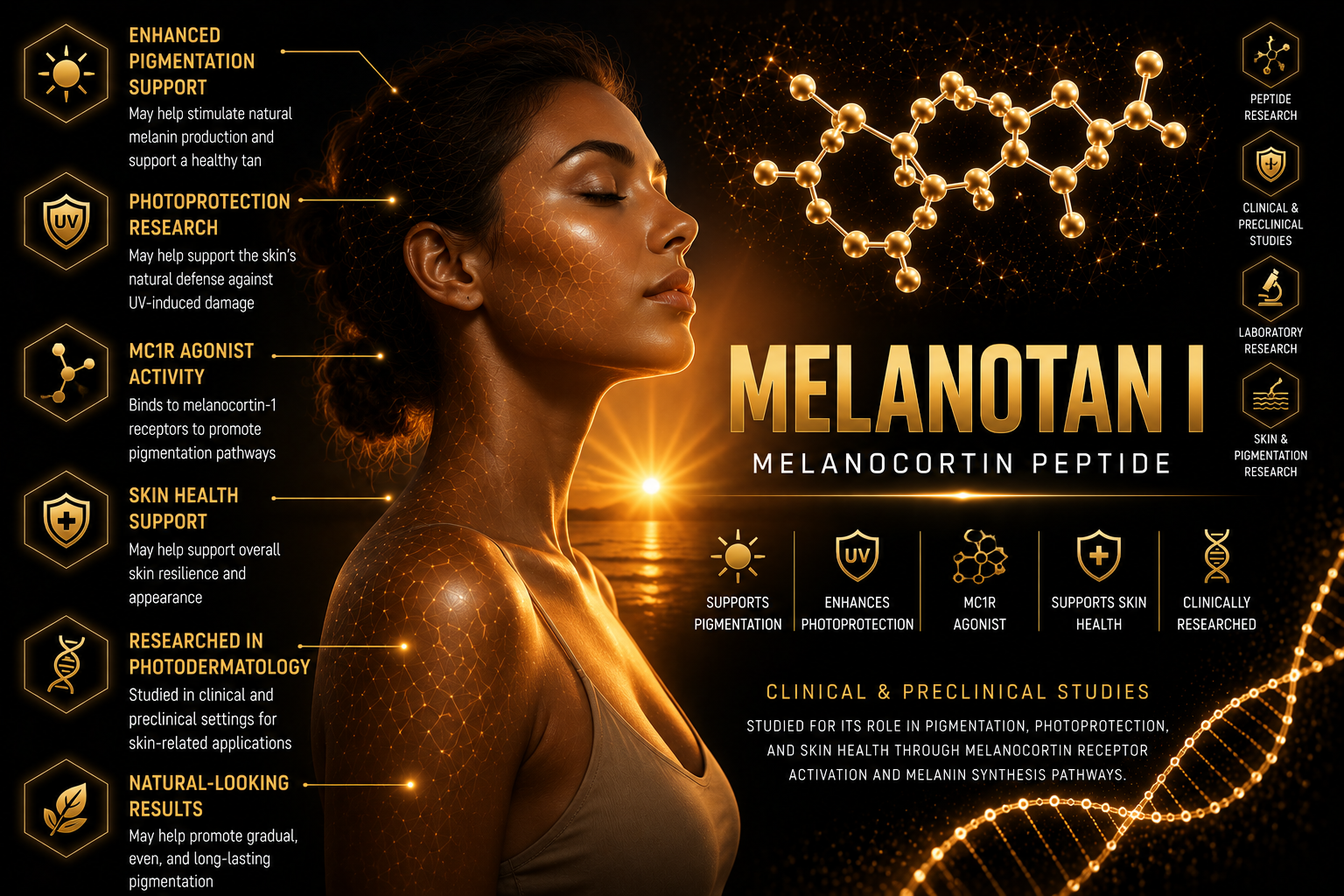
Melanotan I Advanced Melanocortin Research

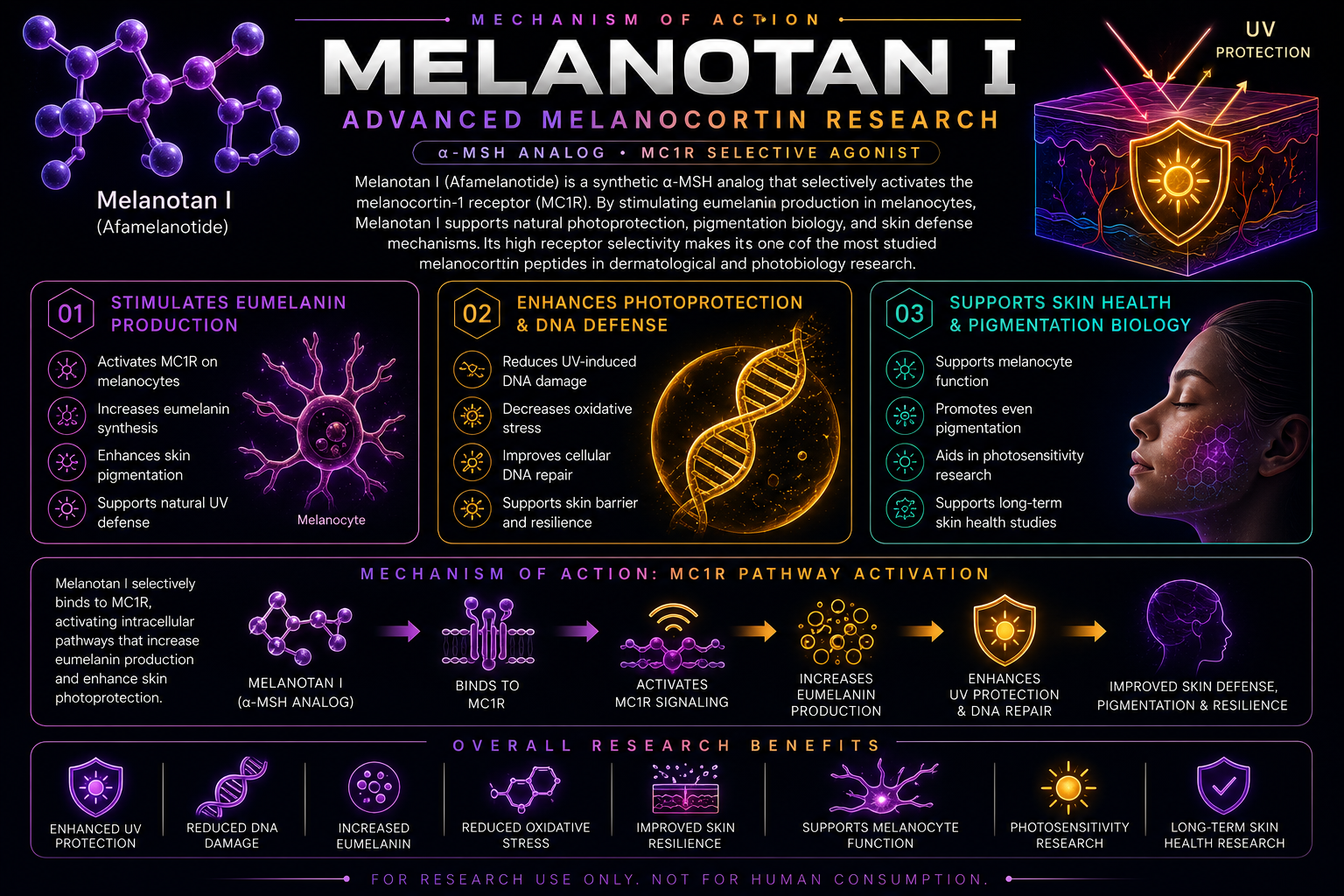
Melanotan I (Afamelanotide) is a synthetic α-melanocyte-stimulating hormone (α-MSH) analog extensively studied for its ability to activate the melanocortin-1 receptor (MC1R). By stimulating melanin production within melanocytes, Melanotan I has become an important research compound in investigations involving pigmentation biology, ultraviolet (UV) protection, DNA photoprotection, and skin physiology. Its receptor selectivity has made it one of the most thoroughly studied melanocortin peptides in both laboratory and clinical research.

Unlike non-selective melanocortin agonists, Melanotan I primarily targets MC1R, promoting eumelanin synthesis while generating comparatively fewer off-target melanocortin effects. Numerous clinical investigations have evaluated its potential role in enhancing the skin’s natural defense against UV-induced damage, reducing oxidative stress, and supporting photoprotection in individuals with photosensitivity disorders.

Current research continues to explore Melanotan I across multiple areas of dermatological science, pigmentation disorders, photobiology, oxidative stress, and melanocyte function.


Research Snapshot

CATEGORY

Dermatology Research

Mechanism

MC1R Receptor Agonist

Research

Clinical & Preclinical

Primary Focus

Pigmentation & Photoprotection

Melanotan I Overview

Melanotan I (Afamelanotide) is a synthetic α-melanocyte-stimulating hormone (α-MSH) analog designed to selectively activate the melanocortin-1 receptor (MC1R). Activation of this receptor stimulates eumelanin production within melanocytes, enhancing the skin’s natural pigmentation and photoprotective mechanisms. Because of its high selectivity for MC1R, Melanotan I has become one of the most extensively studied melanocortin peptides in dermatological and photobiology research.

Unlike broader melanocortin receptor agonists, Melanotan I primarily targets pathways involved in melanin synthesis, ultraviolet (UV) defense, and skin photoprotection while producing minimal activity at other melanocortin receptor subtypes. Clinical and preclinical investigations have demonstrated its ability to increase eumelanin production, reduce UV-induced cellular damage, and support the skin’s natural defense mechanisms, generating significant scientific interest in pigmentation disorders and photosensitivity research.

Current research continues to investigate Melanotan I across a broad range of applications including photoprotection, pigmentation biology, oxidative stress, DNA repair following UV exposure, and melanocyte physiology. As with all compounds featured in the ChoicePeps Research Library, Melanotan I is presented exclusively for educational and scientific reference purposes and is intended for research use only.

Research Highlights

JOURNAL OF INVESTIGATIVE DERMATOLOGY

Clinical and preclinical research investigating Melanotan I (Afamelanotide) and its ability to stimulate eumelanin production, enhance pigmentation, and improve the skin's natural defense against ultraviolet (UV) radiation.

NEW ENGLAND JOURNAL OF MEDICINE

Clinical studies evaluating Melanotan I in patients with photosensitivity disorders, demonstrating improved photoprotection, increased melanin production, and reduced susceptibility to UV-induced skin damage.

PIGMENT CELL & MELANOMA RESEARCH

Comprehensive research examining melanocortin-1 receptor (MC1R) signaling, melanocyte biology, eumelanin synthesis, pigmentation regulation, and the therapeutic potential of melanocortin analogs including Melanotan I.

PHOTODERMATOLOGY, PHOTOIMMUNOLOGY & PHOTOMEDICINE

Current peer-reviewed investigations exploring Melanotan I's role in photoprotection, oxidative stress reduction, DNA repair following UV exposure, pigmentation disorders, and long-term skin health research.

Research Applications

Current preclinical and clinical research is investigating Melanotan I across multiple areas of pigmentation biology, melanocortin signaling, photoprotection, ultraviolet (UV) defense, and dermatological science.

☀️
Photoprotection
  • UV defense mechanisms
  • Reduced UV-induced damage
  • Natural skin protection
  • Photosensitivity research
🎨
Pigmentation Biology
  • Eumelanin production
  • Melanocyte activation
  • Skin pigmentation
  • MC1R signaling
🧬
Cellular Protection
  • DNA repair research
  • Oxidative stress reduction
  • Cellular resilience
  • Skin barrier function
🌞
Dermatology Research
  • Photosensitivity disorders
  • Pigmentation disorders
  • Skin physiology
  • Melanocyte biology
🔬
Future Clinical Research
  • Photodermatology
  • Skin aging research
  • Melanocortin therapeutics
  • UV protection strategies
📈
Ongoing Investigation
  • Long-term skin health
  • MC1 receptor biology
  • Photobiology research
  • Dermatological applications

— FAQ

Questions, answered.

If you don’t see what you’re looking for, reach our team directly — usually under 24 hours.
01What is Melanotan I

Melanotan I (Afamelanotide) is a synthetic α-melanocyte-stimulating hormone (α-MSH) analog that selectively activates the melanocortin-1 receptor (MC1R). It has been extensively studied for its ability to stimulate eumelanin production, enhance the skin’s natural pigmentation, and improve protection against ultraviolet (UV) radiation. It remains an important research compound in dermatology and photobiology.

Melanotan I binds to and activates MC1 receptors located on melanocytes. Activation of these receptors increases eumelanin synthesis, leading to darker skin pigmentation while enhancing the skin’s natural defense against UV-induced cellular damage. Researchers continue to investigate its role in photoprotection, pigmentation biology, and skin health.

Researchers are interested in Melanotan I because of its highly selective action on the melanocortin system and its demonstrated ability to increase eumelanin production. Clinical and preclinical studies have explored its potential for improving photoprotection, reducing UV-induced DNA damage, and supporting individuals with photosensitivity disorders.

Numerous peer-reviewed studies have investigated Melanotan I in the fields of dermatology, melanocyte biology, and photomedicine. Published research has examined pigmentation, MC1 receptor signaling, ultraviolet protection, oxidative stress reduction, and the therapeutic potential of melanocortin receptor agonists.

Melanotan I primarily influences the melanocortin-1 receptor (MC1R) pathway, stimulating melanogenesis and eumelanin production. Research also suggests effects on cellular photoprotection, oxidative stress responses, DNA repair following UV exposure, and overall skin defense mechanisms.

The research peptide Melanotan I itself is not FDA approved as a research compound. However, Afamelanotide, a pharmaceutical form of Melanotan I, has received regulatory approval in certain countries—including FDA approval in the United States for a specific rare photosensitivity disorder. Within the ChoicePeps Research Library, Melanotan I is presented exclusively for laboratory and scientific research purposes.

Current research is investigating Melanotan I across multiple areas including photoprotection, pigmentation disorders, melanocyte function, ultraviolet-induced skin damage, oxidative stress, DNA repair mechanisms, and long-term dermatological health. Ongoing studies continue to explore its role in skin physiology and melanocortin receptor biology.

⚠️ Scientific Disclaimer

The information presented in the ChoicePeps Research Library is provided solely for educational and informational purposes. Content is compiled from publicly available scientific literature and is intended to summarize current areas of research involving investigational compounds.

The material presented on this page has not been evaluated by the U.S. Food and Drug Administration (FDA) and should not be interpreted as medical advice, treatment recommendations, or evidence of clinical efficacy. Scientific understanding continues to evolve as additional laboratory and clinical research becomes available.

ChoicePeps does not make claims regarding the diagnosis, treatment, cure, or prevention of any disease. Visitors are encouraged to consult original peer-reviewed publications when reviewing scientific findings.

FOR RESEARCH USE ONLY

Products offered by ChoicePeps are intended exclusively for legitimate laboratory and scientific research. They are not intended for human or veterinary use, and they are not intended for use in the diagnosis, treatment, cure, or prevention of any disease.