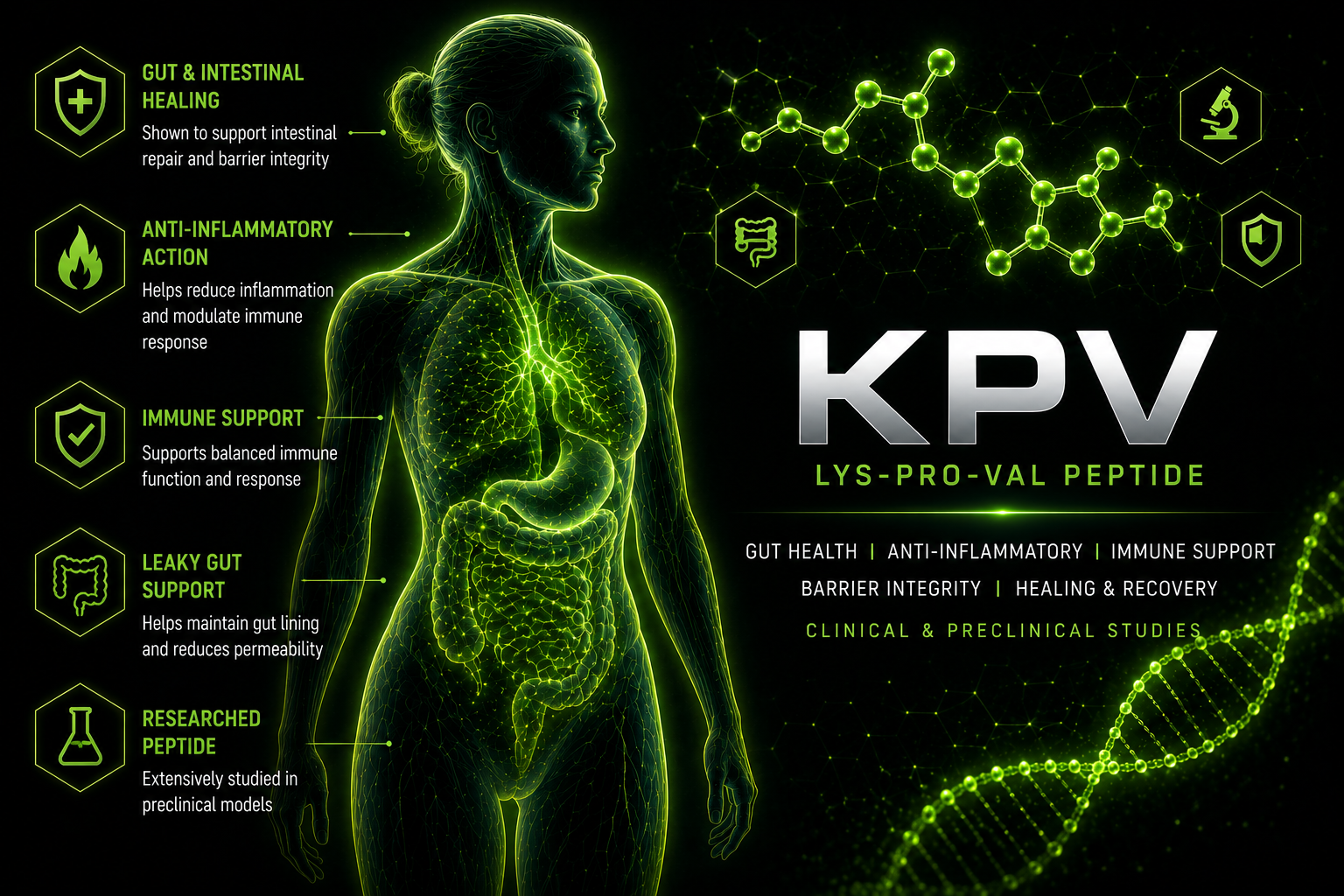
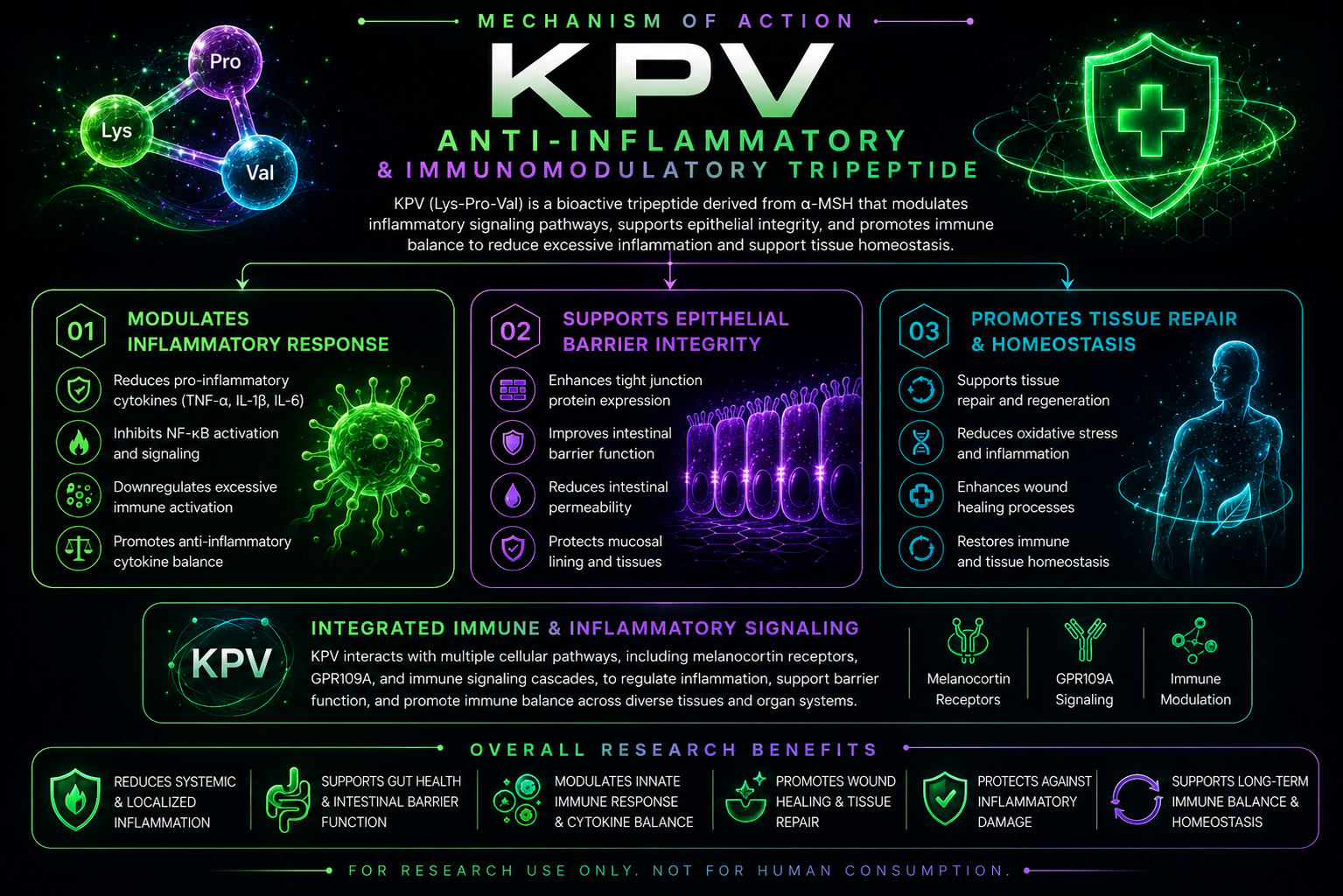
KPV (Lys-Pro-Val) is a naturally occurring tripeptide fragment derived from alpha-melanocyte-stimulating hormone (α-MSH) that is being extensively investigated for its potent anti-inflammatory and immunomodulatory properties. By interacting with inflammatory signaling pathways, KPV has demonstrated the ability to regulate cytokine activity, support epithelial barrier integrity, and reduce excessive inflammatory responses across multiple preclinical models.
Unlike many compounds that target a single inflammatory pathway, KPV influences several key biological processes involved in innate immunity, tissue repair, and immune regulation. Current research has explored its potential applications in gastrointestinal health, inflammatory bowel disease models, skin inflammation, wound healing, and disorders characterized by chronic inflammation, making it one of the most promising anti-inflammatory peptides under investigation.
As research continues to expand, scientists are evaluating KPV’s pharmacology, long-term safety profile, and broader therapeutic potential across inflammatory, autoimmune, gastrointestinal, and dermatological research. As with all compounds featured in the ChoicePeps Research Library, KPV is presented exclusively for educational and scientific reference purposes and is not intended for human consumption.
Anti-Inflammatory Research
Immunomodulatory Tripeptide
Clinical & Preclinical
Inflammation & Immune Regulation
KPV (Lys-Pro-Val) is a naturally occurring tripeptide derived from alpha-melanocyte-stimulating hormone (α-MSH) that has become an important focus of anti-inflammatory and immunomodulatory research. By influencing multiple inflammatory signaling pathways, KPV has demonstrated the ability to reduce pro-inflammatory cytokine activity, support epithelial barrier function, and promote tissue homeostasis across numerous preclinical models involving gastrointestinal, dermatological, and immune-mediated inflammation.
Unlike therapies that target a single inflammatory mediator, KPV appears to regulate several aspects of the body’s innate immune response while preserving normal immune function. Research has shown promising effects in models of inflammatory bowel disease, intestinal barrier dysfunction, skin inflammation, wound healing, and chronic inflammatory disorders, generating significant scientific interest in its potential role as a broad-spectrum anti-inflammatory research peptide.
Current research continues to investigate KPV’s pharmacology, immune signaling mechanisms, long-term safety profile, and potential applications across inflammatory diseases, gastrointestinal health, dermatology, regenerative medicine, and epithelial barrier research. As with all compounds featured in the ChoicePeps Research Library, KPV is presented exclusively for educational and scientific reference purposes and is not intended for human consumption.
Landmark Preclinical Research Demonstrating KPV's Potent Anti-Inflammatory Activity In Experimental Models Of Inflammatory Bowel Disease, Reducing Cytokine Production While Preserving Intestinal Barrier Integrity.
Research Investigating KPV's Ability To Reduce Cutaneous Inflammation, Accelerate Wound Healing, And Modulate Local Immune Responses In Models Of Inflammatory Skin Disease.
Comprehensive Review Examining KPV's Immunomodulatory Mechanisms, Including Regulation Of Pro-Inflammatory Cytokines, Innate Immune Signaling, And Maintenance Of Tissue Homeostasis Across Multiple Organ Systems.
Current Research Summarizing KPV's Potential Applications In Gastrointestinal Health, Epithelial Barrier Function, Chronic Inflammation, Regenerative Medicine, And Immune System Regulation.
Current preclinical and clinical research is investigating KPV across several important areas of inflammation, immune regulation, epithelial barrier integrity, gastrointestinal health, wound healing, and regenerative medicine.
KPV (Lys-Pro-Val) is a naturally occurring tripeptide derived from alpha-melanocyte-stimulating hormone (α-MSH). Researchers study KPV for its potent anti-inflammatory and immunomodulatory properties, particularly its ability to regulate inflammatory signaling, support epithelial barrier integrity, and promote tissue homeostasis across multiple organ systems.
KPV works by influencing several inflammatory signaling pathways involved in the body’s innate immune response. Research suggests it can reduce the production of pro-inflammatory cytokines, promote immune balance, strengthen epithelial barrier function, and help regulate excessive inflammatory activity without broadly suppressing normal immune function.
Researchers are interested in KPV because it has demonstrated promising anti-inflammatory effects in numerous preclinical studies. Its potential to regulate inflammation while supporting tissue repair and immune homeostasis has generated significant interest across gastrointestinal, dermatological, regenerative medicine, and autoimmune research.
Numerous preclinical studies have investigated KPV in models of inflammatory bowel disease, intestinal barrier dysfunction, skin inflammation, wound healing, and chronic inflammatory disorders. Ongoing research continues to explore its mechanisms of action, immune signaling pathways, and broader applications in inflammation-related diseases.
Current research indicates that KPV influences inflammatory cytokine signaling, melanocortin-related pathways, epithelial barrier function, innate immune responses, and cellular mechanisms involved in tissue repair and inflammation resolution. These complementary actions make KPV an important subject in anti-inflammatory and regenerative research.
Current research is investigating KPV across inflammatory bowel disease, epithelial barrier dysfunction, gastrointestinal health, dermatology, wound healing, regenerative medicine, immune regulation, and chronic inflammatory conditions. Additional studies continue to evaluate its long-term safety profile, pharmacology, and potential future research applications.
Cagrilintide has not received FDA approval as a standalone therapeutic product. It continues to be evaluated in ongoing clinical research, including studies investigating its use both alone and in combination with GLP-1 receptor agonists. The Cagrilintide featured in the ChoicePeps Research Library is presented exclusively for educational and scientific reference purposes and is intended for laboratory research only. It is not intended for human consumption or medical use.
The information presented in the ChoicePeps Research Library is provided solely for educational and informational purposes. Content is compiled from publicly available scientific literature and is intended to summarize current areas of research involving investigational compounds.
The material presented on this page has not been evaluated by the U.S. Food and Drug Administration (FDA) and should not be interpreted as medical advice, treatment recommendations, or evidence of clinical efficacy. Scientific understanding continues to evolve as additional laboratory and clinical research becomes available.
ChoicePeps does not make claims regarding the diagnosis, treatment, cure, or prevention of any disease. Visitors are encouraged to consult original peer-reviewed publications when reviewing scientific findings.
Added to cart
Check out our shop to see what's available