FREE SHIPPING ON ORDERS OVER $99
SECURE CREDIT / DEBIT CARD CHECKOUT
3RD PARTY LAB TESTED - COA AVAILABLE
FOR RESEARCH USE ONLY
SHIPS WITHIN 24 HOURS
JOIN OUR DISCORD FOR GIVEAWAYS!
QUALITY YOU AN TRUST

FREE SHIPPING ON ORDERS OVER $99
SECURE CREDIT / DEBIT CARD CHECKOUT
3RD PARTY LAB TESTED - COA AVAILABLE
FOR RESEARCH USE ONLY
SHIPS WITHIN 24 HOURS
JOIN OUR DISCORD FOR GIVEAWAYS!
QUALITY YOU AN TRUST

—PEER-REVIEWED RESEARCH

DSIP Advanced Sleep Research

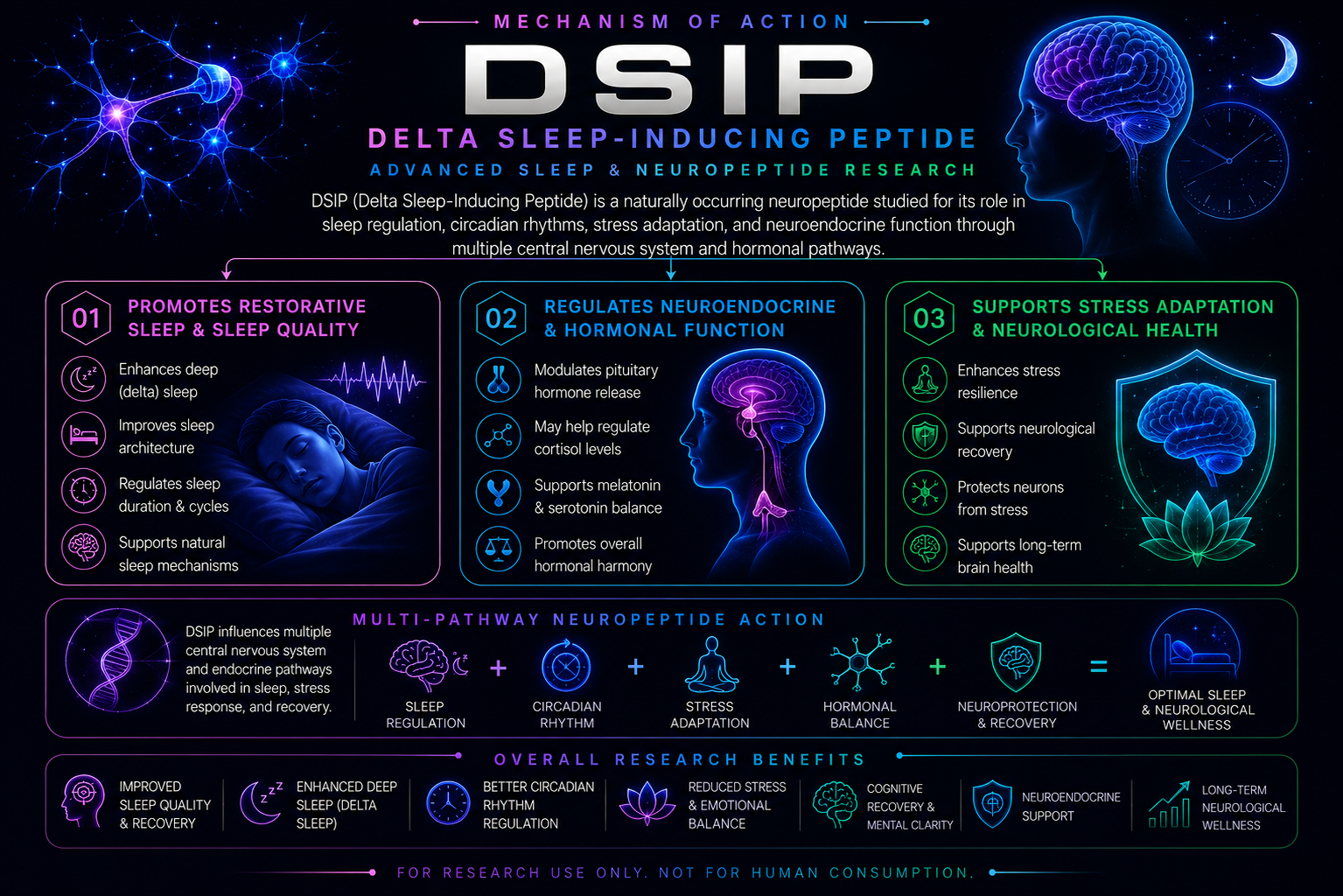
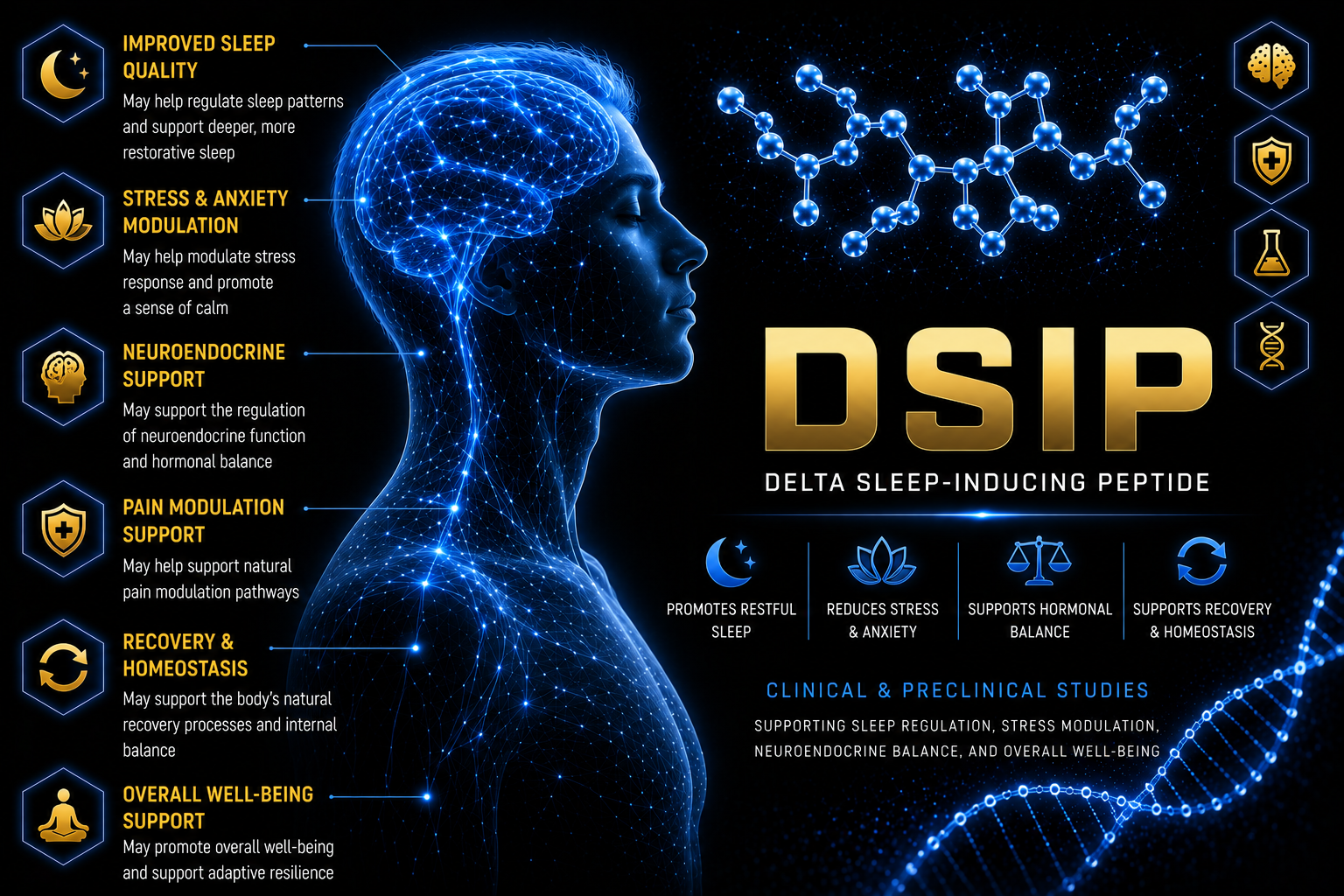
DSIP (Delta Sleep-Inducing Peptide) is a naturally occurring neuropeptide that has been extensively investigated for its potential role in sleep regulation, circadian rhythm modulation, stress adaptation, and neuroendocrine function. Researchers study DSIP for its effects on sleep architecture, recovery processes, hormonal signaling, and central nervous system activity. Through its influence on multiple neurological and endocrine pathways, DSIP continues to generate scientific interest in both preclinical and clinical investigations involving restorative sleep, stress resilience, cognitive recovery, and overall neurological health.


Research Snapshot

CATEGORY

Sleep Research

Mechanism

Neuroregulatory Peptide

Research

Clinical & Preclinical

Primary Focus

Sleep & Neuroendocrine Function

DSIP Overview

DSIP (Delta Sleep-Inducing Peptide) is a naturally occurring neuropeptide that has been extensively investigated for its potential role in regulating sleep architecture, circadian rhythms, stress adaptation, and neuroendocrine function. Through interactions with central nervous system signaling pathways, DSIP is being researched for its influence on restorative sleep, recovery processes, hormonal balance, and neurological resilience. Its unique biological profile has made it a subject of continuing interest in both preclinical and clinical sleep research.

Unlike conventional compounds that primarily target a single neurotransmitter system, DSIP is believed to influence multiple neurophysiological and endocrine pathways involved in sleep regulation and stress response. Research has explored its effects on sleep quality, cortisol regulation, pituitary hormone activity, and the body’s natural recovery mechanisms. These diverse mechanisms have generated significant scientific interest in DSIP’s potential applications across sleep disorders, neurological recovery, stress resilience, and overall neuroendocrine health.

Current research continues to investigate DSIP across a wide range of applications including circadian rhythm regulation, recovery following physical and mental stress, cognitive restoration, hormone signaling, healthy aging, and long-term neurological wellness. As with all compounds featured in the ChoicePeps Research Library, DSIP is presented exclusively for educational and scientific reference purposes and is intended for research use only.

Research Highlights

NATURE REVIEWS NEUROSCIENCE

Comprehensive reviews examining sleep regulation, neuroendocrine signaling, circadian biology, and the physiological mechanisms underlying Delta Sleep-Inducing Peptide (DSIP) research.

JOURNAL OF SLEEP RESEARCH

Experimental studies investigating DSIP's influence on sleep architecture, stress adaptation, circadian rhythms, and neurophysiological regulation across preclinical models.

SLEEP

Peer-reviewed research exploring the relationship between DSIP, restorative sleep, endocrine function, stress resilience, and central nervous system activity in laboratory settings.

NEUROSCIENCE & BIOBEHAVIORAL REVIEWS

Current scientific reviews summarizing evidence surrounding DSIP-related mechanisms involving sleep quality, neuroendocrine balance, stress response, neurological recovery, and future translational research.

Research Applications

Current preclinical and clinical research is investigating Delta Sleep-Inducing Peptide (DSIP) across multiple areas of sleep regulation, circadian biology, neuroendocrine function, stress adaptation, and neurological recovery.

😴
Sleep Regulation
  • Sleep architecture
  • Sleep quality research
  • REM & non-REM studies
  • Circadian rhythm support
🧠
Neuroendocrine Function
  • Hormonal regulation
  • Hypothalamic signaling
  • Neuropeptide activity
  • Homeostatic balance
🌿
Stress Resilience
  • Stress adaptation
  • Cortisol regulation research
  • Autonomic balance
  • Recovery physiology
🛡️
Neurological Recovery
  • Neuroprotection research
  • Brain recovery models
  • Cellular resilience
  • Central nervous system support
🔬
Future Clinical Research
  • Sleep disorders
  • Chronic stress research
  • Neurodegenerative disease
  • Recovery medicine
📈
Ongoing Investigation
  • Long-term safety evaluation
  • Sleep physiology
  • Circadian biology
  • Neuroendocrine mechanisms

— FAQ

Questions, answered.

If you don’t see what you’re looking for, reach our team directly — usually under 24 hours.
01What is DSIP

Delta Sleep-Inducing Peptide (DSIP) is a naturally occurring neuropeptide first identified for its potential role in sleep regulation. Researchers continue to investigate DSIP for its involvement in circadian rhythms, neuroendocrine function, stress adaptation, hormonal balance, and neurological recovery. Although its complete biological role remains under investigation, DSIP has become an important research compound in neuroscience and sleep physiology.

DSIP appears to influence multiple neurochemical pathways rather than acting on a single receptor. Research suggests it may help regulate sleep architecture, hypothalamic signaling, circadian rhythms, stress responses, and neuroendocrine activity. Scientists are actively studying how these mechanisms contribute to overall nervous system homeostasis.

Researchers are interested in DSIP because of its potential involvement in restorative sleep, stress resilience, hormonal regulation, and neurological function. Its broad physiological activity makes it a promising candidate for research involving sleep disorders, recovery, neuroprotection, and overall brain health.

DSIP has been investigated in both preclinical and clinical studies examining sleep physiology, circadian biology, endocrine regulation, stress adaptation, pain modulation, and neurological recovery. Although findings have been mixed, ongoing research continues to explore its mechanisms and potential scientific applications.

Current evidence suggests DSIP may influence several interconnected biological systems, including sleep-wake regulation, neuroendocrine signaling, circadian rhythms, autonomic nervous system function, and stress-response pathways. The precise mechanisms remain an active area of scientific investigation.

No. DSIP is not approved by the U.S. Food and Drug Administration (FDA) for the diagnosis, treatment, prevention, or cure of any disease. It is supplied strictly for laboratory and scientific research purposes.

Current research is exploring DSIP’s potential roles in sleep quality, circadian rhythm regulation, chronic stress, neurological recovery, endocrine balance, neuroprotection, healthy aging, and central nervous system physiology. Continued studies aim to better understand its biological mechanisms and long-term research applications.

⚠️ Scientific Disclaimer

The information presented in the ChoicePeps Research Library is provided solely for educational and informational purposes. Content is compiled from publicly available scientific literature and is intended to summarize current areas of research involving investigational compounds.

The material presented on this page has not been evaluated by the U.S. Food and Drug Administration (FDA) and should not be interpreted as medical advice, treatment recommendations, or evidence of clinical efficacy. Scientific understanding continues to evolve as additional laboratory and clinical research becomes available.

ChoicePeps does not make claims regarding the diagnosis, treatment, cure, or prevention of any disease. Visitors are encouraged to consult original peer-reviewed publications when reviewing scientific findings.

FOR RESEARCH USE ONLY

Products offered by ChoicePeps are intended exclusively for legitimate laboratory and scientific research. They are not intended for human or veterinary use, and they are not intended for use in the diagnosis, treatment, cure, or prevention of any disease.