This article is for laboratory research and educational purposes only. Retatrutide is provided strictly for laboratory research use only and is not for human consumption. All information is based on publicly available scientific literature.
Retatrutide Research Spotlight: A Comprehensive Guide for Laboratory Use
Exploring the structure, properties, and research applications of this triple agonist peptide
What is Retatrutide?
Retatrutide is a synthetic 39-amino acid peptide that acts as a triple agonist, simultaneously targeting GLP-1, GIP, and glucagon receptors. It is currently one of the most studied multi-receptor agonists in metabolic research models.
Chemical Properties & Specifications
- Molecular Formula: C221H342N46O68
- Molecular Weight: Approximately 4813.5 Da (free base)
- CAS Number: Not yet assigned (research compound)
- Sequence: Tyr-Aib-Gln-Gly-Thr-Phe-Thr-Ser-Asp-Tyr-Ser-Ile-Leu-Aib-Lys-Ile-Ala-Gln-Lys-Ala-Phe-Val-Gln-Trp-Leu-Ile-Ala-Gly-Gly-Pro-Ser-Ser-Gly-Ala-Pro-Pro-Pro-Ser-NH₂ (with specific modifications)
- Appearance: White to off-white lyophilized powder
Mechanism of Action in Laboratory Research
In research settings, Retatrutide simultaneously activates GLP-1, GIP, and glucagon receptors. Researchers study its effects on metabolic pathways, energy expenditure, and glucose regulation in cell cultures and animal models. The triple-agonist profile makes it a valuable tool for investigating multi-receptor signaling and comparative efficacy against single or dual agonists.
Common Research Applications
Scientists use Retatrutide as a tool to investigate:
- Multi-receptor metabolic signaling pathways
- Comparative studies with semaglutide, tirzepatide, and other incretin mimetics
- Energy balance and appetite regulation mechanisms in lab models
- Peptide stability and receptor affinity optimization
Reconstitution & Handling for Laboratory Use
In research laboratories, Retatrutide is typically reconstituted with bacteriostatic water or sterile water for injection. Researchers should gently swirl the vial until the lyophilized powder is fully dissolved. Reconstituted solutions are usually stored refrigerated and used within recommended timeframes. Always follow standard aseptic laboratory techniques.
Frequently Asked Questions
What is the molecular weight of Retatrutide?
Approximately 4813.5 Daltons (free base).
How many receptors does Retatrutide target?
Three: GLP-1, GIP, and glucagon receptors.
How should Retatrutide be stored in the lab?
Lyophilized powder: Refrigerate at 2–8°C. Protect from light and moisture.
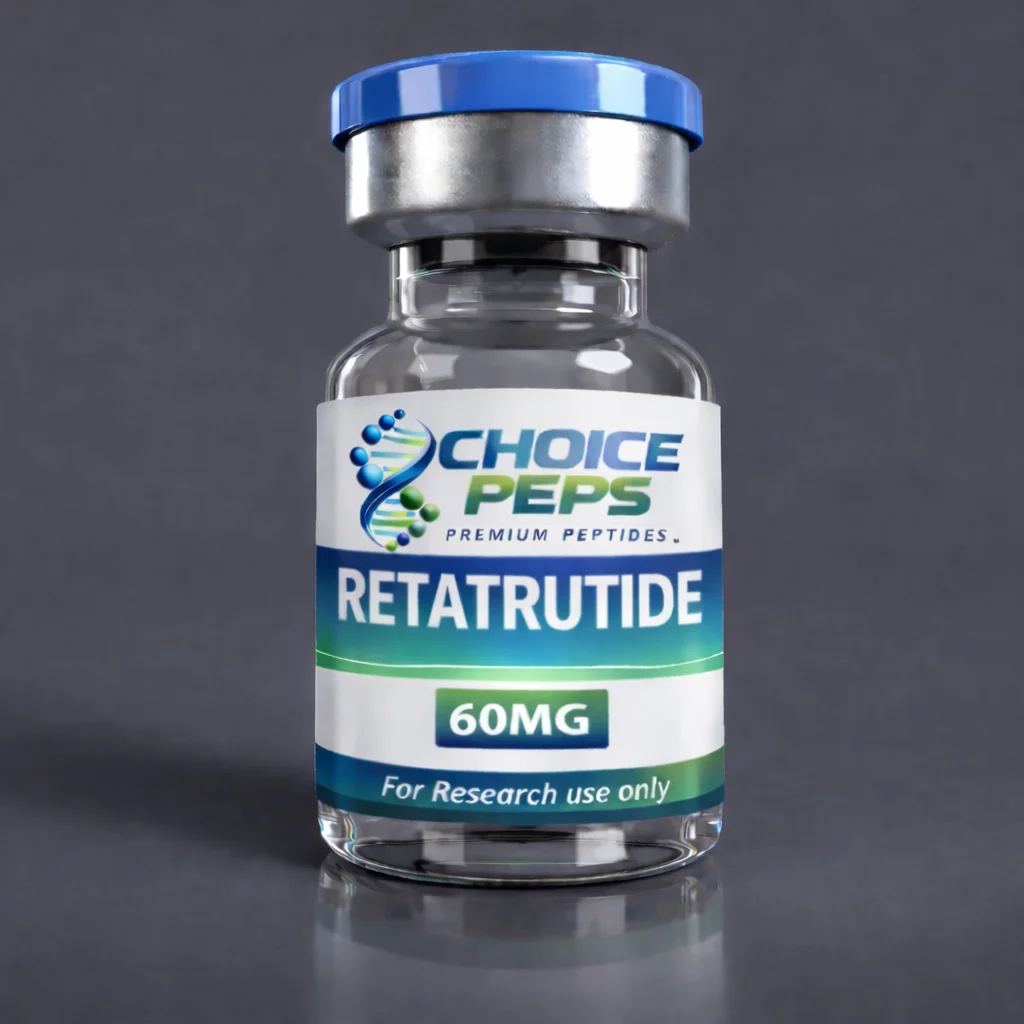
ChoicePeps Retatrutide – Third-party tested, research-grade vial
Ready to Explore Retatrutide for Your Laboratory Research?
High-purity Retatrutide, third-party tested and available in research-grade vials.
View Retatrutide Research Product →For laboratory research use only. Not for human consumption.
All data presented is for informational purposes and drawn from public scientific sources. Researchers should conduct their own due diligence and follow all applicable institutional and regulatory guidelines.
Featured products
-
Cagrilintide 10mg
Original price was: $56.00.$45.00Current price is: $45.00. -
CP-Reta
Price range: $39.99 through $109.99 -
CP-Tirz
Price range: $34.99 through $94.99 -
Tesamorelin 10mg
Original price was: $59.00.$49.00Current price is: $49.00.