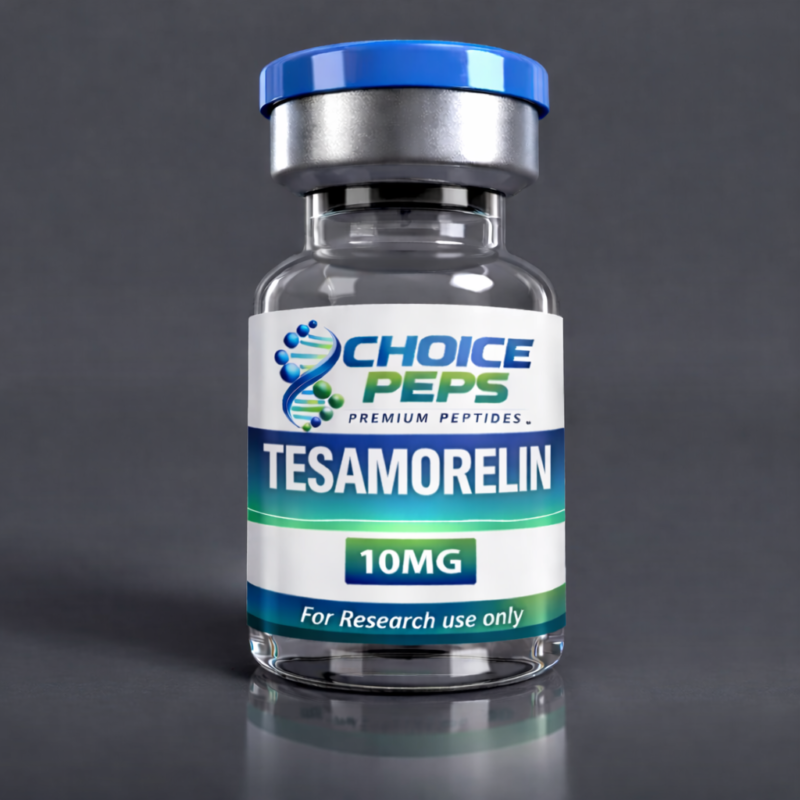
This article is for laboratory research and educational purposes only. Tesamorelin is provided strictly for laboratory research use only and is not for human consumption. All information is based on publicly available scientific literature.
Tesamorelin Research Spotlight: A Comprehensive Guide for Laboratory Use
Exploring the structure, properties, and research applications of this synthetic GHRH analog
What is Tesamorelin?
Tesamorelin is a synthetic 44-amino acid peptide analog of human Growth Hormone-Releasing Hormone (GHRH). It features an N-terminal modification with a trans-3-hexenoyl group attached to the tyrosine residue, which enhances stability compared to native GHRH in research settings.
Chemical Properties & Specifications
- Molecular Formula: C221H366N72O67S
- Molecular Weight: Approximately 5135.86 Da (free base)
- CAS Number: 218949-48-5
- Sequence: (trans-3-hexenoyl)-Tyr-Ala-Asp-Ala-Ile-Phe-Thr-Asn-Ser-Tyr-Arg-Lys-Val-Leu-Gly-Gln-Leu-Ser-Ala-Arg-Lys-Leu-Leu-Gln-Asp-Ile-Met-Ser-Arg-Gln-Gln-Gly-Glu-Ser-Asn-Gln-Glu-Arg-Gly-Ala-Arg-Ala-Arg-Leu-NH2
- Appearance: Typically supplied as a white to off-white lyophilized powder
Mechanism of Action in Laboratory Research
In research models, Tesamorelin binds to GHRH receptors on somatotroph cells in the anterior pituitary. This interaction stimulates the release of endogenous growth hormone via activation of adenylate cyclase and increased cAMP levels. Researchers study this pathway in cell cultures, animal models, and receptor-binding assays to better understand GHRH signaling, pulsatile hormone release, and downstream effects on the growth hormone axis.
Common Research Applications
Scientists use Tesamorelin as a tool to investigate:
- GHRH receptor pharmacology and signaling pathways
- Metabolic regulation and adipose tissue dynamics in controlled lab models
- Comparative studies with other GHRH analogs (e.g., Sermorelin)
- Stability and degradation profiles of modified peptides
Tesamorelin vs. Sermorelin in Research
Both are GHRH analogs, but key differences include:
| Aspect | Tesamorelin | Sermorelin |
|---|---|---|
| Amino Acids | 44 (full sequence + modification) | 29 (truncated) |
| Modification | N-terminal trans-3-hexenoyl group | None |
| Research Focus | Enhanced stability & receptor affinity studies | Basic GHRH signaling |
Reconstitution & Handling for Laboratory Use
In research settings, Tesamorelin is typically reconstituted with bacteriostatic water or sterile water for injection. Researchers gently swirl (do not shake vigorously) the vial until the lyophilized powder fully dissolves. Reconstituted solutions are usually stored refrigerated and used within recommended timeframes to maintain integrity. Always follow standard aseptic laboratory techniques.
Frequently Asked Questions
What is the molecular weight of Tesamorelin?
Approximately 5135.86 Daltons (free base).
Is Tesamorelin supplied as acetate salt?
Yes, it is commonly provided as the acetate form for improved solubility in research applications.
How should Tesamorelin be stored in the lab?
Lyophilized powder: Refrigerate at 2–8°C. Protect from light and moisture.
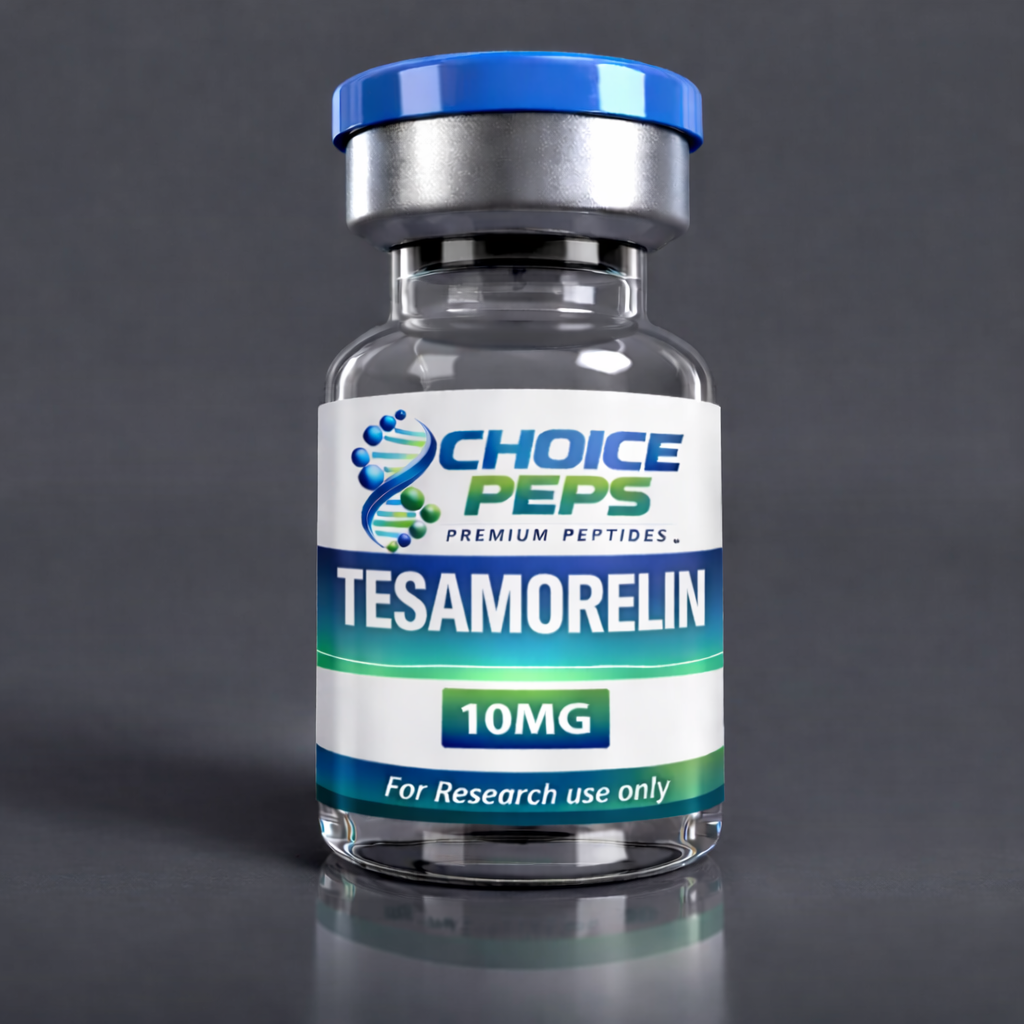
ChoicePeps Tesamorelin 10mg – Third-party tested, research-grade vial
Ready to Explore Tesamorelin for Your Laboratory Research?
High-purity Tesamorelin, third-party tested and available in research-grade vials.
View Tesamorelin Research Product →For laboratory research use only. Not for human consumption.
All data presented is for informational purposes and drawn from public scientific sources. Researchers should conduct their own due diligence and follow all applicable institutional and regulatory guidelines.
References available upon request or via public databases such as PubChem (CID 16137828).
Featured products
-

Cagrilintide 10mg
-
Cagrilintide 5mg
Original price was: $50.00.$40.00Current price is: $40.00. -
CP-Reta
Price range: $39.99 through $109.99 -
CP-Tirz
Price range: $34.99 through $94.99 -
Tesamorelin 10mg
Original price was: $59.00.$49.00Current price is: $49.00.